We are currently witnessing a massive explosion in productivity and code thanks to AI agents. Developers are using vibe coding to conjure up features in minutes that used to take weeks. But inside every enterprise, there is a quiet, growing sense of dread in the Security Operations (SecOps) department. The reason is simple math. If your AI agents are generating millions of lines of ephemeral code every day, how can a human possibly review it all?
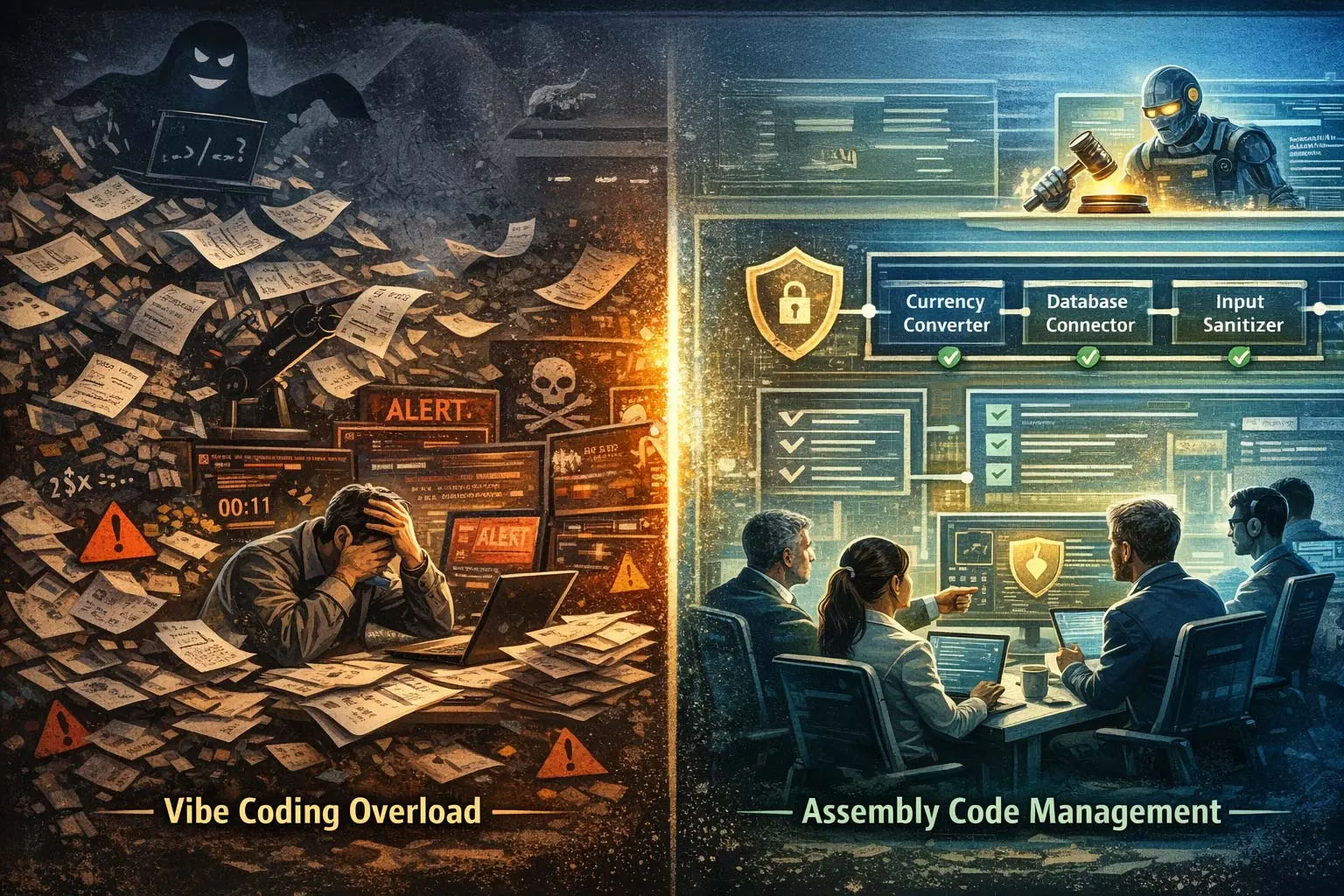
The honest answer is that they cannot. We have reached the point where human review of raw AI code is a physical impossibility. Some call it AI slop, but even as it gets more sophisticated, the sheer volume is overwhelming.
Vibe coding relies on the idea that the model can just "figure it out" on the fly. It generates a custom script for a specific task, runs it, and then moves on. This code is often ephemeral, meaning it exists only for a moment.
If you have ten agents running a thousand tasks a day, you are looking at ten thousand unique code blocks. Expecting a human security professional to audit that volume is like asking a librarian to read every book in the Library of Congress every single morning before the doors open. It does not happen. Instead, companies either slow down to a crawl or, more dangerously, they just stop reviewing the code entirely and hope for the best.
Imagine a major fintech company that uses a fleet of AI agents to manage personalized investment strategies for its high net worth clients. These agents are vibe coding custom rebalancing scripts based on daily market shifts. Because the system is fast and "the vibes are good," the company bypasses manual review to stay competitive.
One Tuesday, a model updates in the background. Suddenly, the agent begins generating a slightly different logic for tax loss harvesting. It isn't a total failure; the code runs perfectly. However, the new "vibed" logic accidentally triggers a series of wash sales that violate federal securities laws.
Because the code was ephemeral and generated on the fly, there was no pre-approved blueprint to check against. By the time the compliance team realized what happened, the agents had executed four hundred thousand illegal trades. The company was hit with a massive regulatory fine and lost its license to operate in several key markets. The board was left asking a single, haunting question: "Who approved the code that broke the law?" The answer was no one. It was a black box that no human had the time to open.
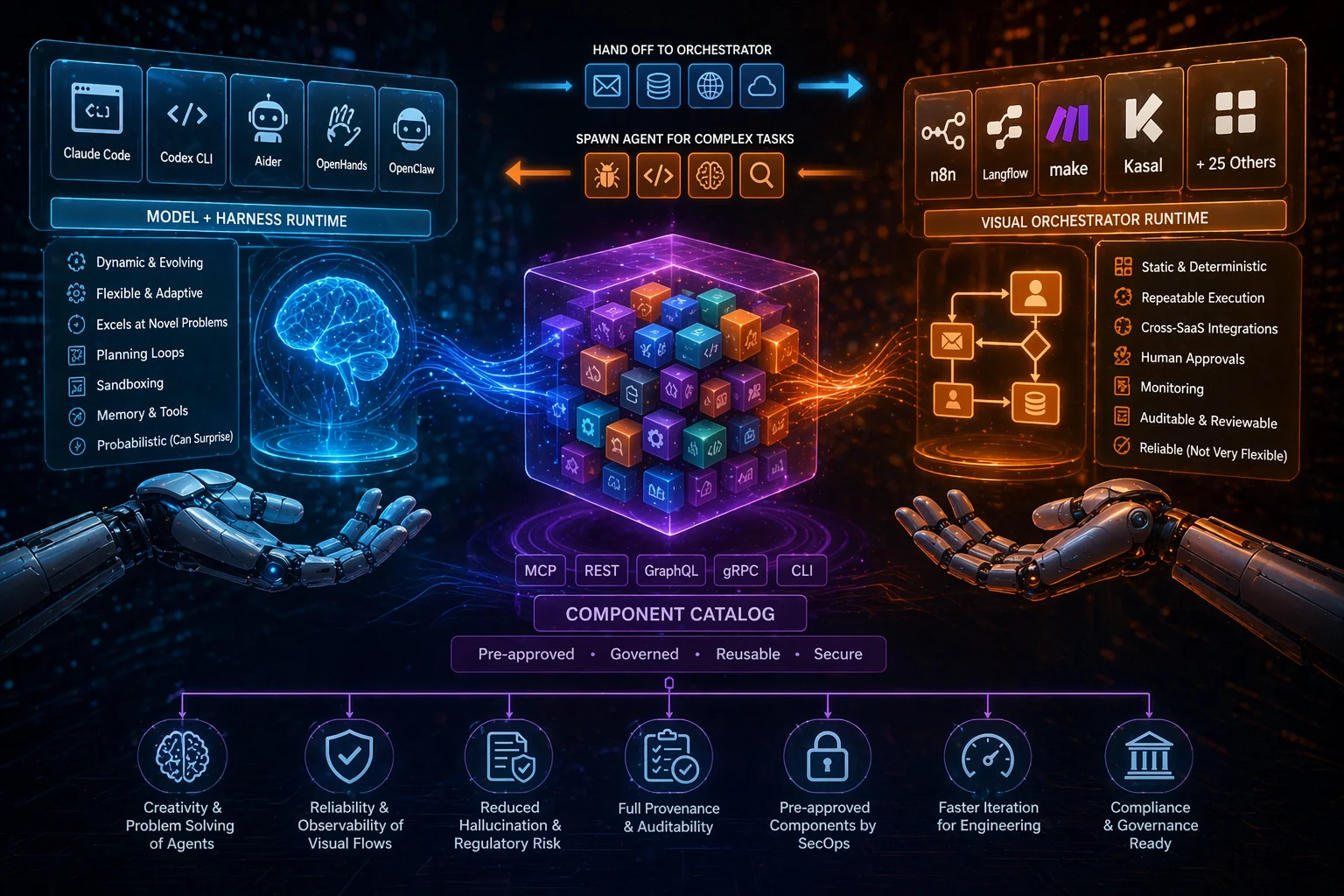
This is why the enterprise must move away from raw generation and toward component assembly. In an assembly model, you aren't reviewing a fresh 500-lines of code every time an agent acts. Instead, you are approving a "Lego brick" a single time.
Once a "Currency Converter" or a "Database Connector" component is approved by your SecOps team, it is added to a trusted catalog. The agent can then use that component a million times without requiring a single second of additional human review. This is the only way to scale AI without abandoning security.
Of course, components need to evolve. This is where the assembly model becomes truly powerful. By using "Change Deltas," your security team only has to look at what has actually changed.
To make this even faster, we can use an LLM-as-judge to analyze the "blast radius" of a component. The judge evaluates how a component interacts with the rest of the system. It can check the component against your company’s specific security policies and flag exactly where a risk might exist. This focuses the human reviewer on the five percent of the code that actually matters, rather than drowning them in the ninety five percent that is standard boilerplate.
The fundamental deficiency of vibe coding is that it creates a workload that humans can never satisfy. It forces a choice between gridlock and “trust AI completely”.
Vibe assembly solves this by turning SecOps into an automated, manageable engine. By using a catalog of pre-approved components, you ensure that your security policy is enforced at the level of the building blocks. You reduce the burden on your team, shorten approval cycles, and finally give your business the ability to run at the speed of AI without the fear of a regulatory or security disaster. In the era of the agent, the only way to scale is to stop coding the vibes and start assembling the truth. Assembly is the way.
Like what you see? Share it with your friends.