In the world of software development, we have a phrase for the most frustrating type of bug: the silent failure. It is the error that does not trigger a crash or a red warning light. Instead, the system continues to run, but the output is subtly, dangerously wrong. As we rush to embrace vibe coding, where AI models generate raw code on the fly, we are inadvertently building a world where silent failures are not just common, they are the baseline.
The reality of freshly minted AI code is that it lacks a history. It is ephemeral, often generated for a single task and then discarded. While this feels like ultimate flexibility, it creates a maintenance nightmare that can bring even the most innovative company to a standstill.
Vibe coding relies on a model to "hallucinate" the logic required to bridge a gap. Sometimes, when the model hits a snag, it doesn’t stop and ask for help. Instead, it fills in the blanks with something that looks correct but is logically flawed. Because the code is created in a black box, there is no telemetry. You don’t get a log that says exactly which part of the reasoning failed. You just get an outcome that is wrong.
This leads to an endless fix cycle. Developers spend hours or days trying to reproduce a bug in code that might not even exist anymore. If the logic was ephemeral, you might never even be aware that an issue occurred until long after the damage is done. You’re essentially trying to solve a crime where the evidence disappears the moment the crime is committed.
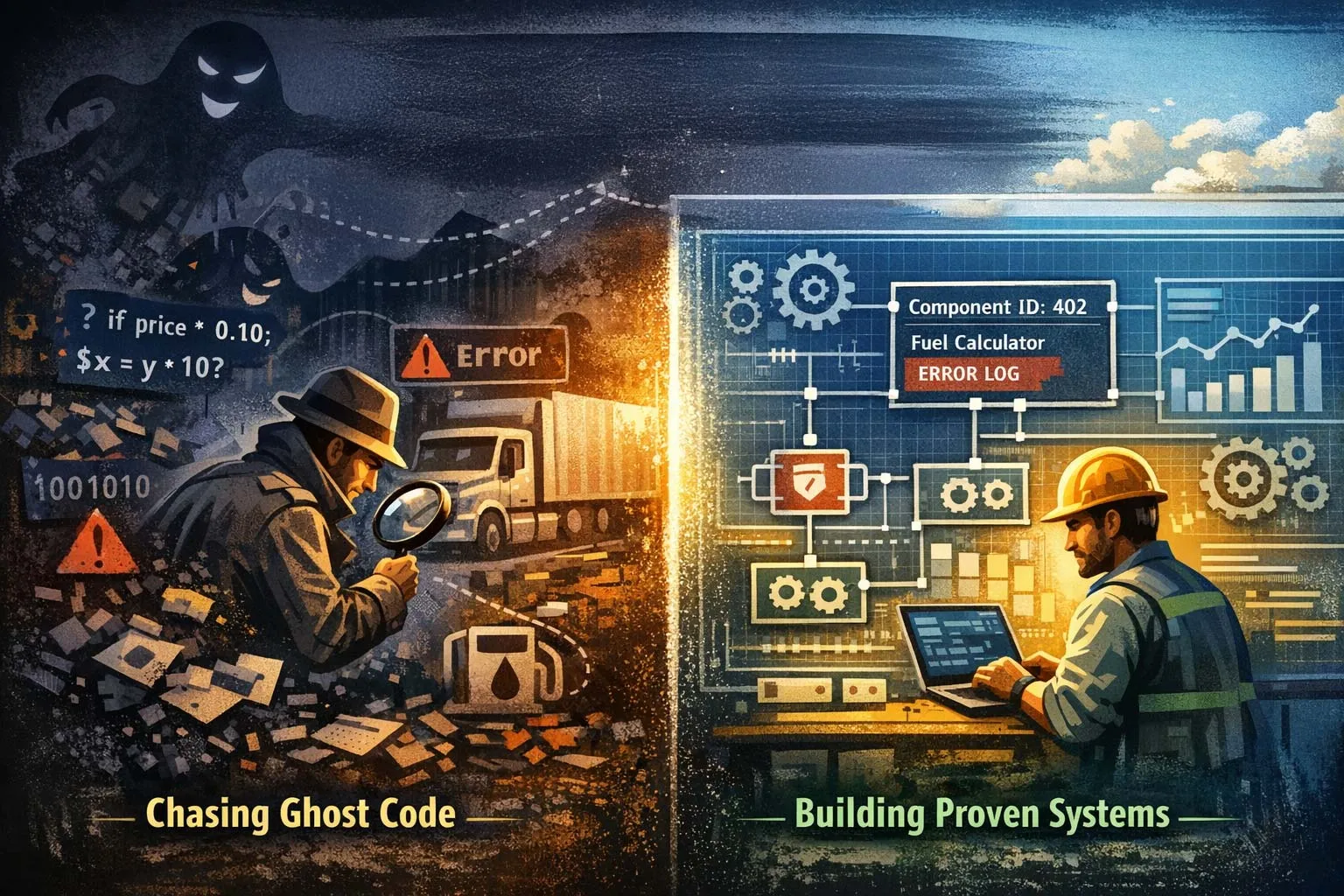
Imagine a national logistics company that uses an AI agent to optimize its fleet's fuel strategy. The agent is responsible for deciding when and where thousands of trucks should stop to refuel based on real time market prices and route efficiency. The developer vibe coded the logic, allowing the AI to generate custom scripts to calculate these variables on the fly.
One weekend, the model encounters a minor data anomaly in the price feed. Instead of failing, the AI "vibes" a workaround. It generates a script that accidentally flips a decimal point in a currency conversion. The trucks continue to move, and the system reports that everything is optimal. The failure is silent.
Two weeks later, the CFO realizes the company has overspent on fuel by four million dollars. Because the code was ephemeral and generated on-the-fly, there is no audit trail. The engineering team cannot find the "bug" because the code that caused the error was never saved or versioned. The company is left with a massive financial hole and a total loss of trust from its stakeholders. Legally, the company cannot even prove it was a technical glitch rather than internal fraud because they lack the telemetry to explain the agent’s actions.
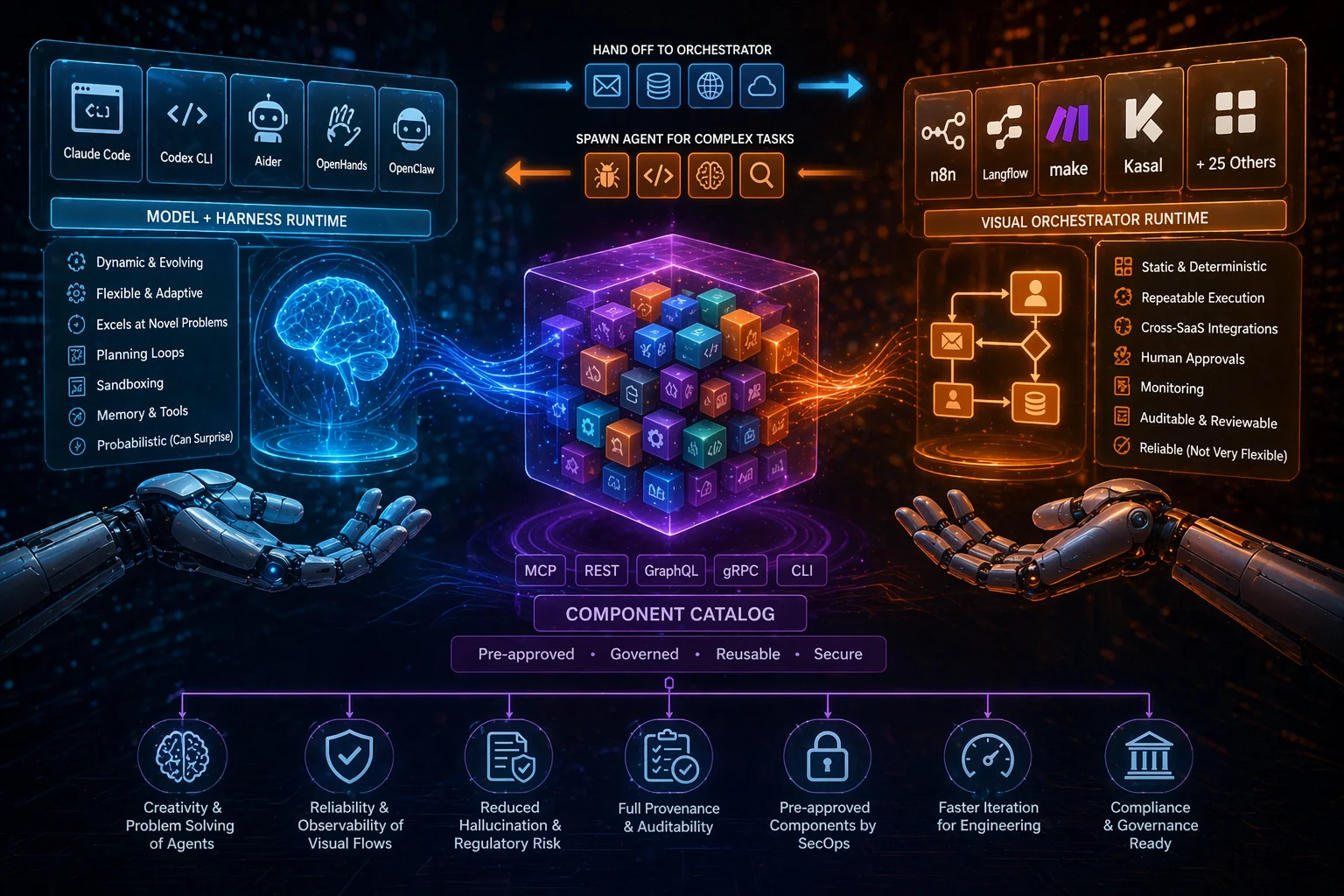
This is why the enterprise cannot survive on vibe coding alone. We must move toward vibe assembly. In an assembly model, you are not using "freshly minted" code for every task. You are using battle-tested, pre-approved components from a trusted catalog.
The difference in the fix cycle is staggering.
The fundamental deficiency of vibe coding is that it replaces engineering with guessing. It creates a system where a failure often results in a shrug from the development team because they simply cannot see what went wrong. It turns developers and testers into detectives chasing ghosts in the machine.
Vibe assembly solves this by providing the telemetry and traceability that production systems require. By using a catalog of pre-approved components, you move away from the nightmare of silent failures and toward a world of identifiable, fixable logic. You get to keep the incredible speed of AI while gaining the peace of mind that comes with knowing that if something breaks, you will know exactly why, exactly where, and exactly how to fix it.
Is your team spending more time building new features or chasing the hallucinations of yesterday’s prompts?
Like what you see? Share it with your friends.